HeartForce™ technology is based on strong clinical science. From 2019 to 2023 we conducted a multicenter clinical study designed to develop and validate the algorithm of our Electro-mechanical CAD Risk Score (EMCR Score™) for coronary artery disease (CAD) screening.
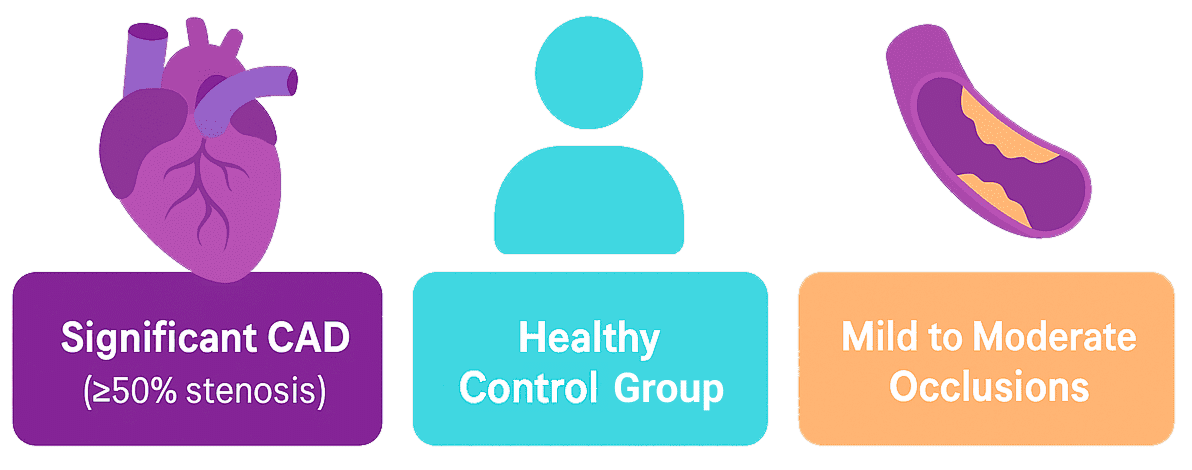
Patients with significant CAD (defined as ≥50% stenosis)
Healthy age-matched control group
Individuals with mild to moderate occlusions
This diverse cohort ensured a balanced dataset, representative of real-world patient profiles across the CAD risk spectrum.
Validation Methods
Benchmark diagnostic tests, namely Coronary CT Angiography (CCTA) and Invasive Coronary Angiography (ICA), confirmed the findings.
Key Findings
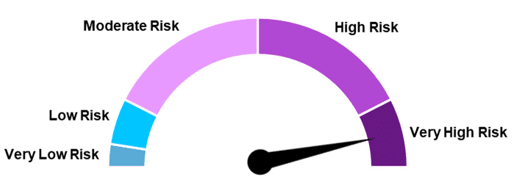
Risk Stratification Accuracy: The EMCR Score™ successfully stratified patients into five clinically actionable groups:
Very Low Risk: CAD prevalence <5%;
Low Risk: CAD prevalence 5 – >15%;
Moderate Risk: CAD prevalence 15 – < 50%;
High Risk: CAD prevalence – < 85%;
Very High Risk: CAD prevalence > 85%
High-Risk Screening: EMCR Score™ could detect CAD risk in high risk patients with multiple CAD-associated risk factors, a major limitation of current screening tools.
Implications for Clinical Decision-MakingOur EMCR Score™ supports:
Confident ruling out of CAD in low-risk patients
More efficient use of healthcare resources through less imaging and follow-ups that are unnecessary
Frontline CAD screening in primary care, pharmacies, ambulances, occupational & institutional medicine settings, hospital’s emergency centers and cardiology departments
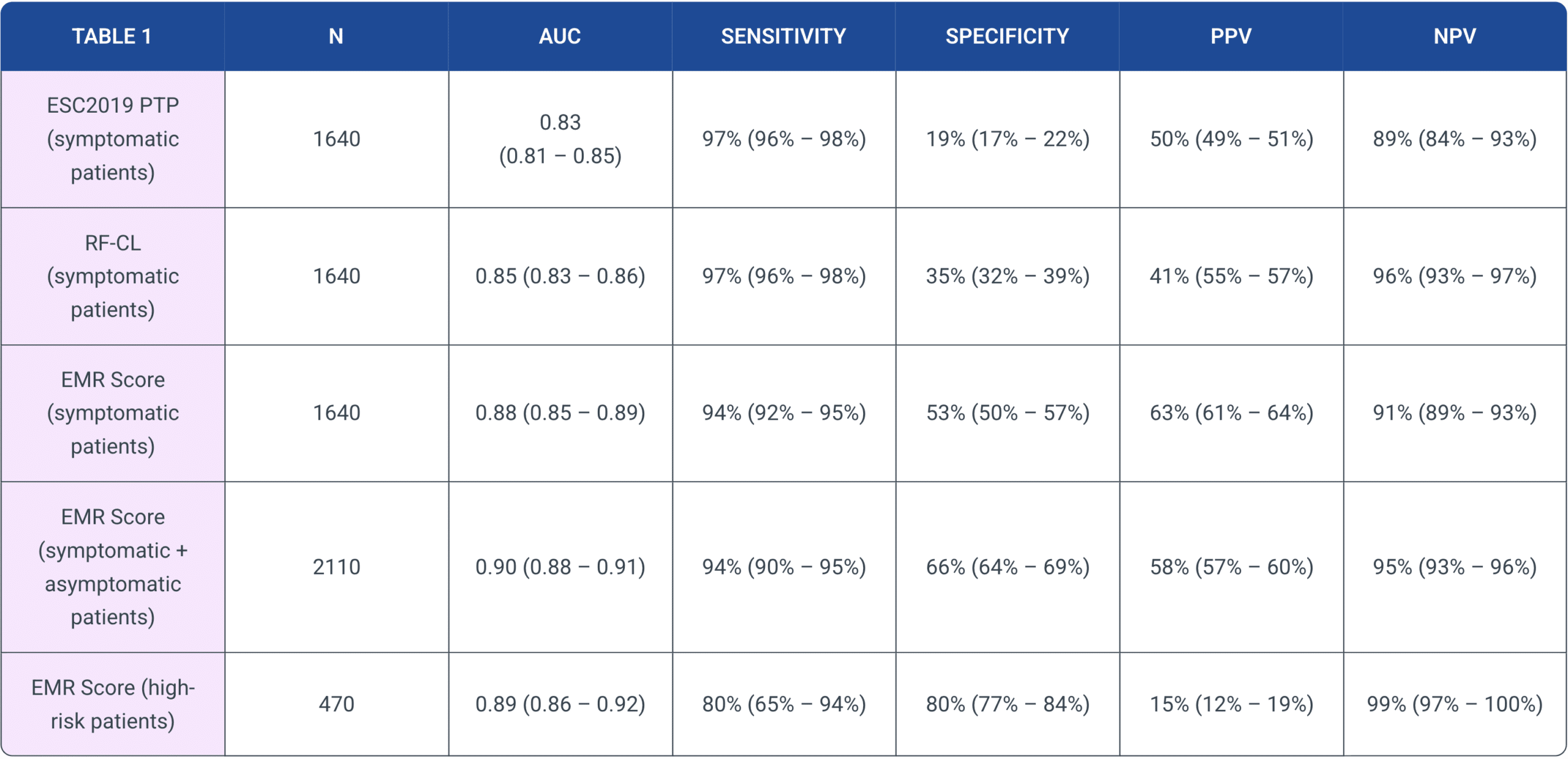
Our clinical study shows that the Electro-mechanical CAD Risk Score™ outperforms traditional screening models such as the ESC2019 PTP and RF-CL scores (Table 1). The EMCR Score™ achieves higher overall accuracy, combining high sensitivity with substantially improved specificity. This balance is critical in clinical practice, as it helps identify patients truly at risk while reducing unnecessary diagnostic testing.
Unlike conventional models, which are limited to patients presenting with symptoms, the EMCR Score™ has been validated for symptomatic patients and high risk patients with multiple CAD-associated risk factors. In the latter, the EMCR Score™ maintained strong discriminatory performance (AUC 0.89) and an exceptionally high negative predictive value (99%), supporting its role as a reliable tool for ruling out the disease.
By extending beyond symptomatic patients, the EMCR Score™ offers clinicians a versatile and effective solution for risk stratification and early detection of CAD across a broader spectrum of patients.
Click to enlarge table
Table 1
N
AUC
Sensitivity
Specificity
PPV
NPV
ESC2019 PTP (symptomatic patients)
1640
0.83 (0.81 – 0.85)
97% (96% – 98%)
19% (17% – 22%)
50% (49% – 51%)
89% (84% – 93%)
RF-CL (symptomatic patients)
1640
0.85 (0.83 – 0.86)
97% (96% – 98%)
35% (32% – 39%)
41% (55% – 57%)
96% (93% – 97%)
EMR Score (symptomatic patients)
1640
0.88 (0.85 – 0.89)
94% (92% – 95%)
53% (50% – 57%)
63% (61% – 64%)
91% (89% – 93%)
EMR Score (symptomatic + asymptomatic patients)
2110
0.90 (0.88 – 0.91)
94% (90% – 95%)
66% (64% – 69%)
58% (57% – 60%)
95% (93% – 96%)
EMR Score (high-risk patients)
470
0.89 (0.86 – 0.92)
80% (65% – 94%)
80% (77% – 84%)
15% (12% – 19%)
99% (97% – 100%)
Table 1. Performance metrics of the 2019 European Society of Cardiology pre-test probability (ESC2019 PTP), risk factor–clinical likelihood (RF-CL), and electro-mechanical CAD risk (EMCR score) models, including area under the receiver operating characteristic curve (AUC), sensitivity, specificity, positive predictive value (PPV), and negative predictive value (NPV). The cutoff values used were 5% for the ESC2019 PTP and RF-CL models and 15% for the EMCR score. Results are presented for symptomatic patients, asymptomatic patients, and the entire dataset for the EMR score. All values are shown with their corresponding 95% confidence intervals (CI).
Published Research
HeartForce’s team is composed of industry leaders in life sciences, medicine, biomedical engineering, and technology. Our research and clinical studies continually advance the fields of medical technology and seismocardiography.
Dehkordi P, Tavakolian K, Xiao ZG, Khosrow-Khavar F. Introducing the Electromechanical Risk Factor Score derived from seismocardiography for estimating the likelihood of coronary artery disease. In: Computing in Cardiology (CinC); 2023. Availeble from: https://ieeexplore.ieee.org/abstract/document/10364231
Dehkordi P, Tavakolian K, Xiao ZG, Yuldashov A, Khosrow-Khavar F. Assessing coronary artery disease risk using seismocardiography in patients with chest pain. In: 2025 IEEE Engineering in Medicine & Biology Society (EMBC); 2025 July 15–19; Milan, Italy. IEEE; 2025