
The Future of
CAD Assessment
A quick, non-invasive, and radiation-free test.
Results That Matter
Sensitivity for unmatched rule-out confidence
Signal Acquisition Time
multi-center clinical studies conducted with ICA and CCTA
Fast, Accurate & Accessible CAD Likelihood Assessment
HeartForce™ enables early and precise assessment of coronary artery disease (CAD) across all clinical settings. Our CAD assessments can be conveniently conducted by healthcare professionals. Suitable for adults with symptoms or an elevated likelihood of CAD.
The Limitations of Current CAD Tests
Current cardiac assessment pathways leave critical operational and clinical gaps:
- Stress ECG tests are less effective and can miss early or silent disease. Many patients are not able to complete them.
- Imaging tests like CCTA and SPECT are costly and hard to access, making them impractical as a first-line option.
- Most current screening and diagnostic tests are only recommended for patients who have experienced symptoms, while people without symptoms also experience heart attacks, and for one third their first event is fatal.
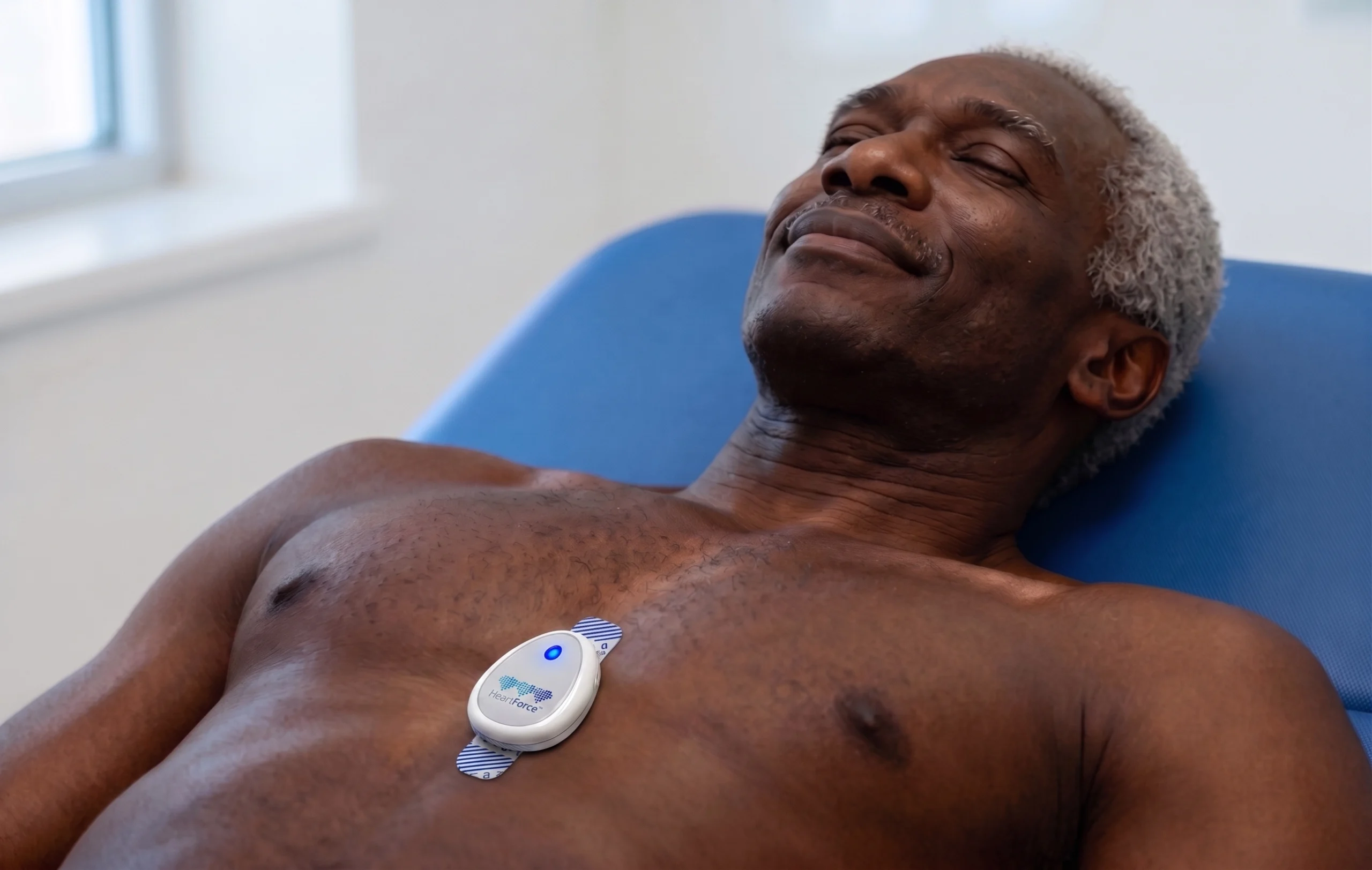
CardioClin™ resolves these limitations by delivering early CAD risk assessment in minutes, ruling out healthy patients at the point of care without triggering unnecessary downstream testing.

Evidence-Based Cardiac Risk Assessment
The CardioClin™ test, utilizing the Electro-mechanical CAD Response Score (EMCR Score™) technology, identifies individuals at risk.
Clinical studies show superior performance to existing CAD screening methods and diagnostic tests like the stress ECG and Calcium test (CACS), making CardioClin™ a reliable tool for proactive care. When your goal is to confidently rule out CAD, traditional tests are not precise enough.

Key Benefits of the CardioClin™ Screening Test
HeartForce™ empowers health care professionals to respond quickly and with assurance, and gives patients and their loved ones what they need most: peace of mind.
From fast results to easy access, we tailor each benefit to enhance decision-making and facilitate timely interventions.
Efficient
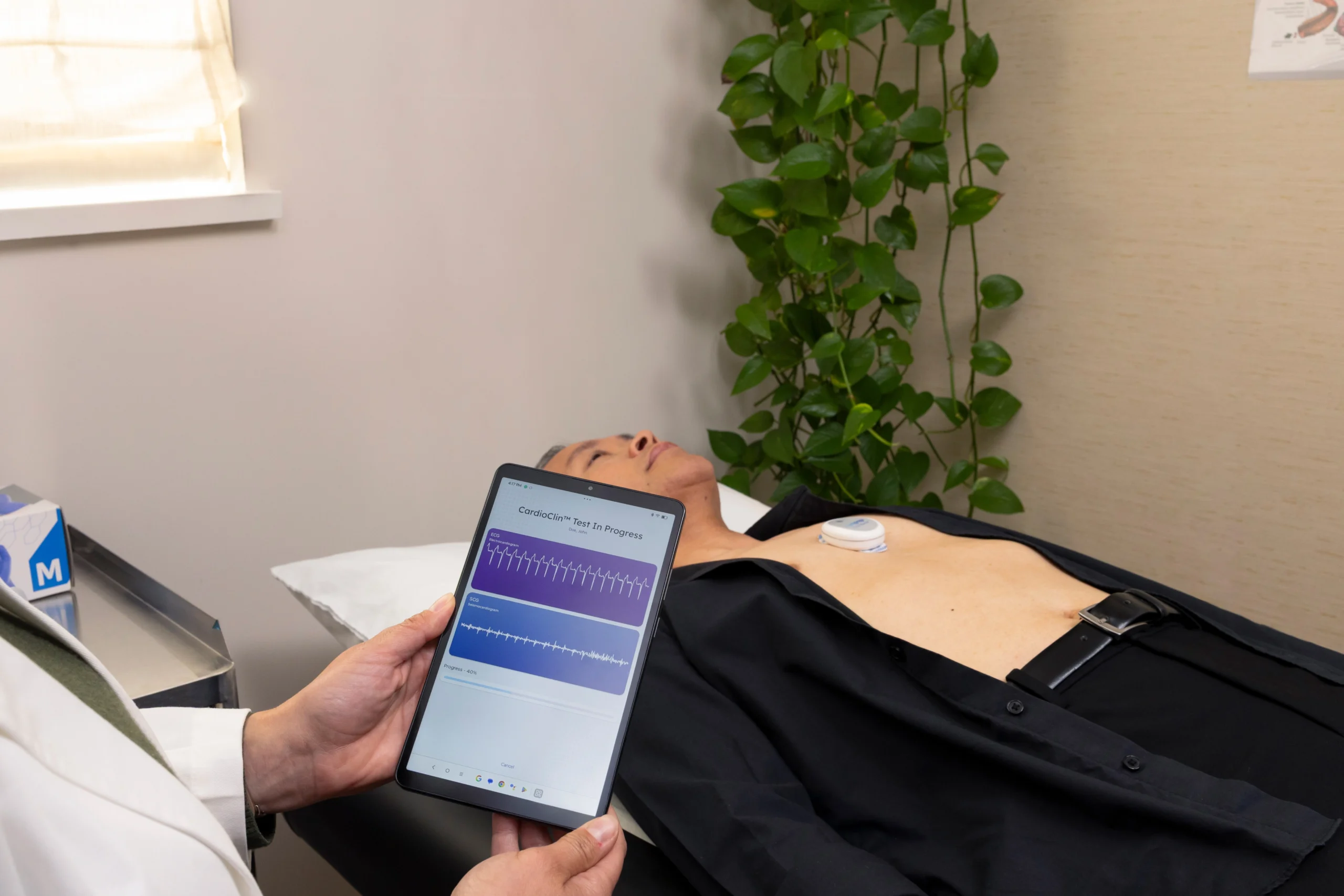
Results in just 60 seconds of signal acquisition. Supports effective triage and added confidence in clinical decision-making.
Affordable
Rules out low-risk cases early to optimize downstream diagnostic capacity and avoid unnecessary testing.
Reliable
Supported by clinical evidence across multiple care settings to deliver consistent, reproducible CAD risk assessment at the point of care.
Scalable
Easily deployable across diverse care settings, without infrastructure overload.
Accessible
Designed for clinical use, with potential applications across primary care, cardiology, pharmacy and corporate healthcare settings.
Non-Invasive
No needles, no radiation, no discomfort. Safe for routine and preventive use.
Frequently Asked Questions
What is the CardioClin™ CAD screening test?
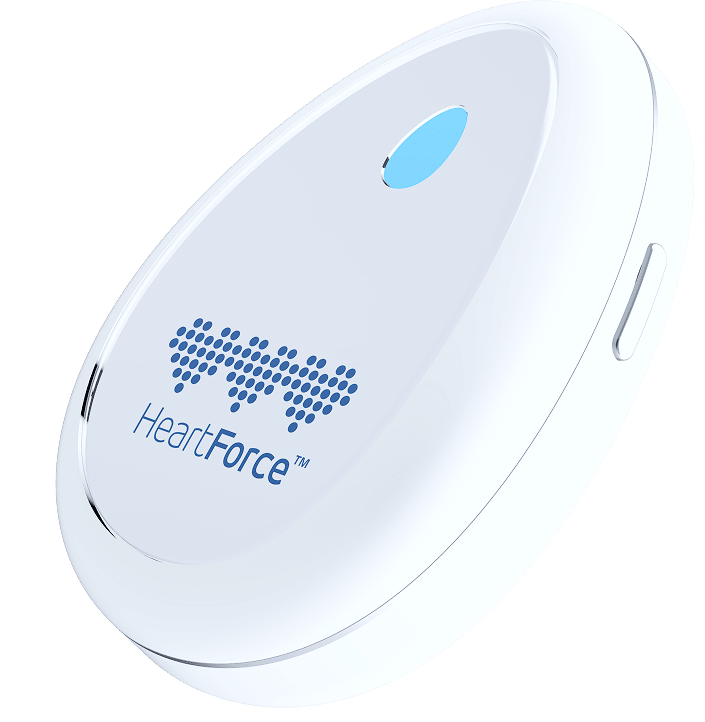
The CardioClin™ is a compact, cost-effective, and AI-powered device that measures the mechanical activity of the heart to assess the risk of coronary artery disease (CAD). It provides a quick and easy option compared to traditional health screening tests. Suitable for first line practices, diagnostic centers, emergency departments, and cardiology units, etc.
How long does the CAD test take?
The CardioClin™ screening process is designed for efficiency in clinical workflows. From setup to results, it takes just 5–10 minutes, with only 60 seconds of cardiac data acquisition. The test is completely non-invasive, easy to perform, and provides immediate, reliable insights to support CAD risk assessment and triage decisions.
Who should consider taking the CAD test?
CardioClin™ CAD testing is appropriate for individuals presenting with symptoms suggestive of coronary artery disease, such as chest discomfort, shortness of breath, or unexplained fatigue, as well as for high-risk patients with multiple CAD-associated risk factors, even when symptoms are mild or absent. Relevant risk factors include hypertension, hyperlipidaemia, diabetes, obesity, smoking, and a family history of heart disease.
How is CardioClin™ different from other CAD tests?
CardioClin™ uses seismocardiography (SCG) to capture the heart’s mechanical activity (micro-vibrations caused by cardiac contraction and valve motion), and applies an AI-driven algorithm, the Electro-Mechanical CAD Risk (EMCR) Score™, to estimate CAD risk. Unlike conventional tests that rely on imaging, radiation, or exercise stress, CardioClin™ provides a rapid, non-invasive, 60-second functional screening that integrates physiological data with clinical risk factors. It supports earlier, more efficient CAD risk stratification and helps reduce unnecessary diagnostic testing.
Contact Us
Looking to improve patient outcomes and reduce unnecessary testing with a scalable, cost-effective, and patient-friendly CAD screening solution?
